Yogurt
Making homemade yogurt is fairly simple. Yogurt is made by the fermentation of milk through the metabolism of lactose by Lactobacillus probiotic bacteria.
Lactobacillus Types
- Lactobacillus acidophilus
- Lactobacillus bulgaricus
- Lactobacillus casei
- Bifidobacterium bifidum
- Streptococcus thermophilus
 |
 |
| Lactobacillus bulgaricus |
Lactobacillus acidophilus |
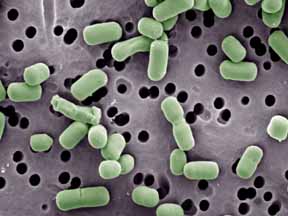 |
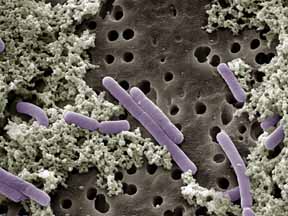 |
| Lactococcus cremoris |
Lactobacillus brevis |
Lactobacillus Benefits
- Increased digestion and GI regularity
- Reduces the effects of lactose intolerance by premetabolizing lactose into lactase
- Prevents and treats intestinal problems like: Clostridium Shigella, Salmonella, and E. Coli 0157:H7
- Prevents and treats rotavirus (or viral stomach flu) by enhancing the immune system
- Inflammation reducer and can be used to treat Crohn's disease or ulcerative colitis
- Reduction of food allergies by increasing the production of interleukin (IL-12) , which helps prevent the bodies release of antibodies (IgE) against foods
- Used to clear up child eczema within a month
- Decreases oxygen-deficient damage to the heart muscle through its effect on inflammation and the immune system.
- When consumed over an eight week period, can help lower LDL cholesterol and normalize blood pressure.
Making Yogurt
- Bring milk to 150°F (180°F if adding gelatin)
- Add 1 cup dry milk per quart of milk
- Cool to 112°F by placing the pan in an ice water bath
- Add 1 cup active culture yogurt 1 cup of the milk and mix until it resembles a smooth, uniform consistency
- Add the yogurt mixture to the remaining milk
- Store in a sealed container at a constant temperature of 110°F for between 4 - 12 hours, depending on the desired yogurt taste
- Refrigerate for 8 hours to set